
Ercan Baba Olive Oil Mill
Factory
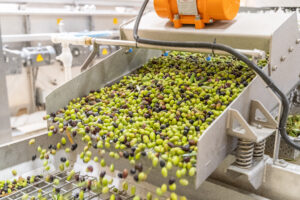
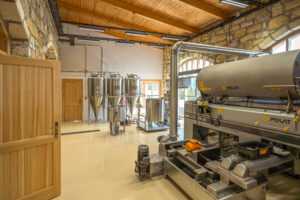
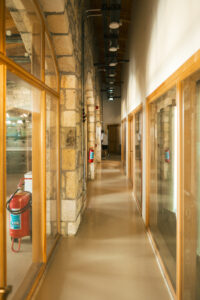
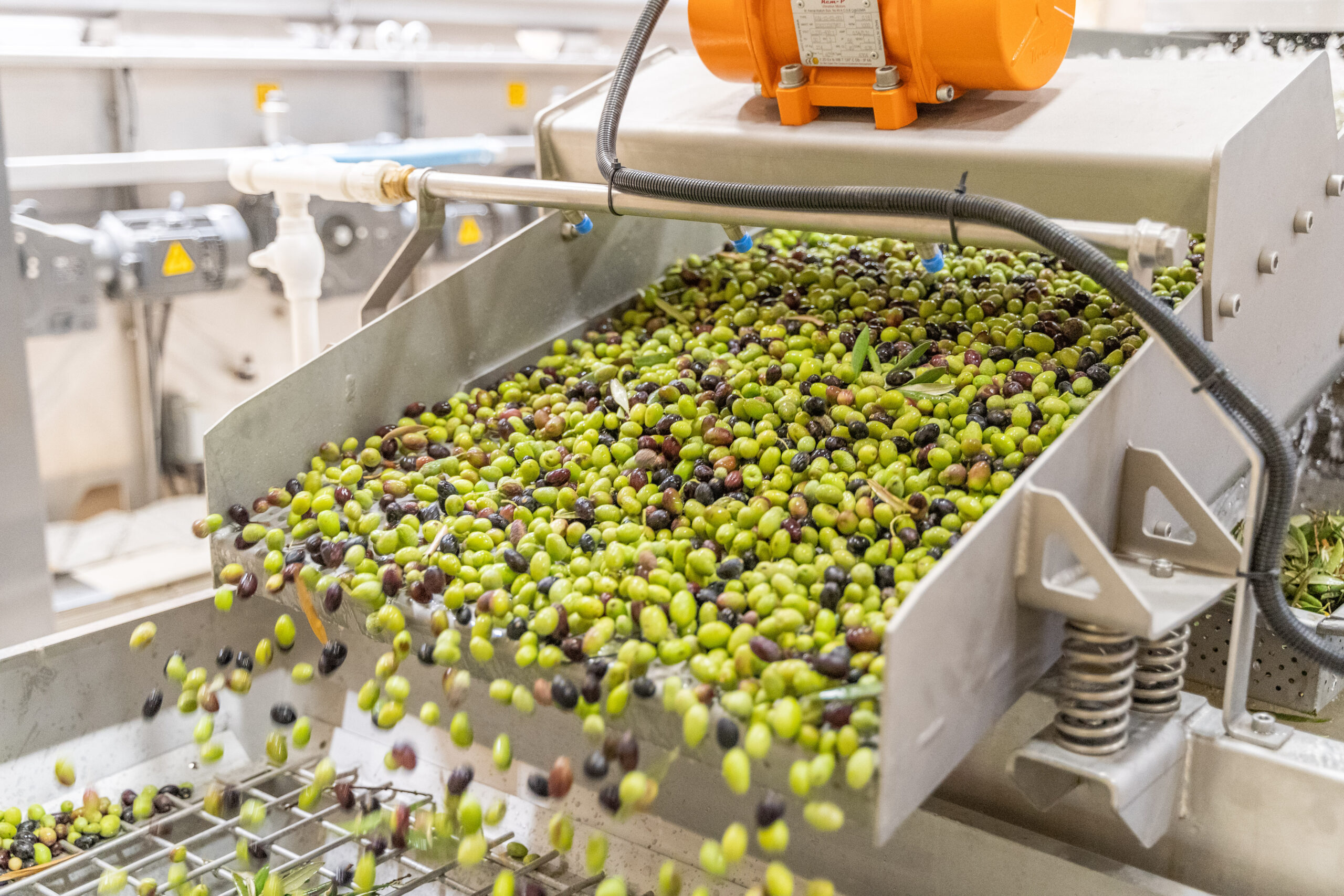
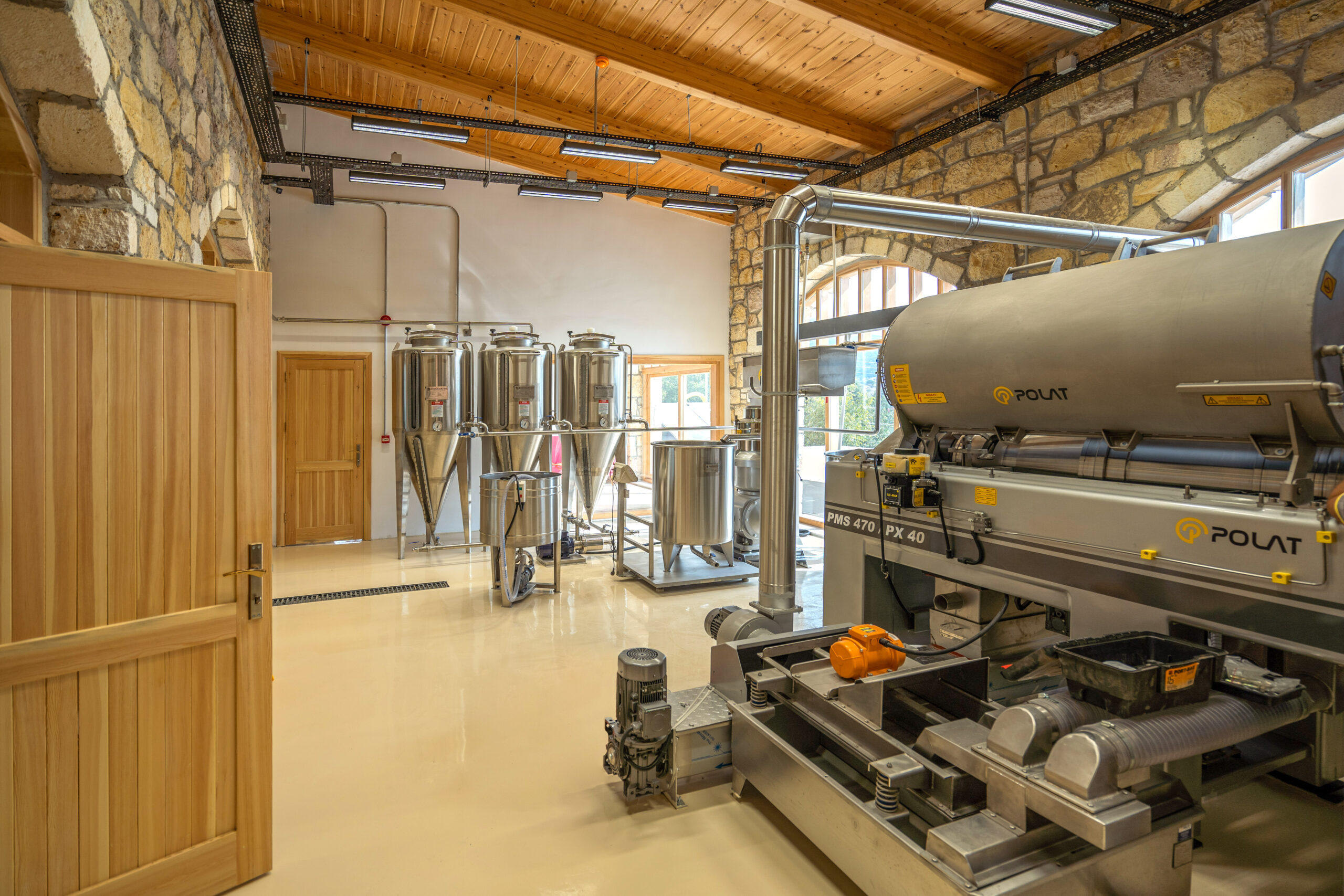
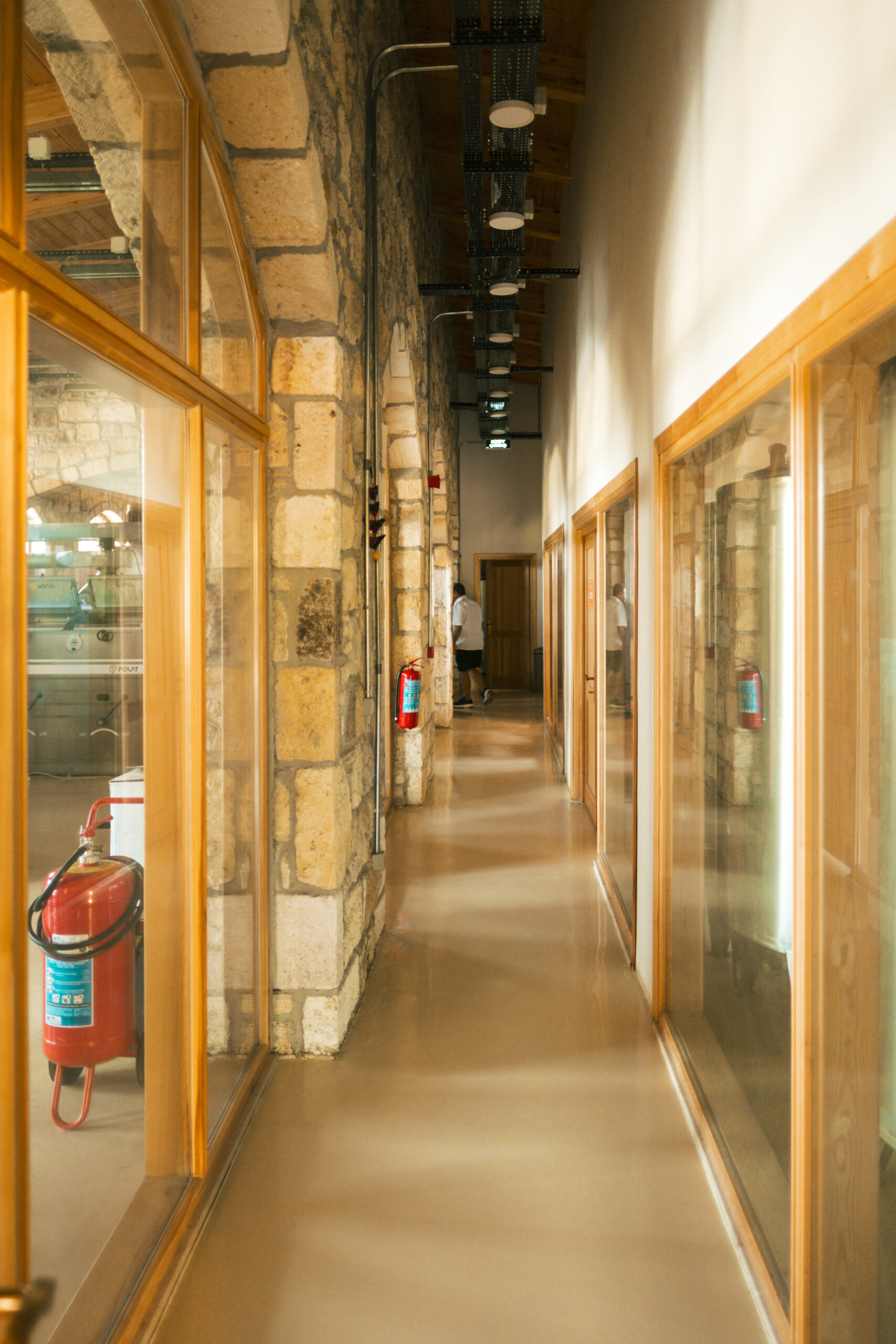
The Ercan Baba Olive Oil Mill, situated at the entrance to the Sevilma Garden, was built in 2022 using Izmir’s traditional stone-masonry technique. Our factory has a total area of 603 square metres. Inside the factory, there is an olive reception area, a production area, a kitchen, a packaging store, a finished goods store, a bottling area, a finished product store, an electrical room and a laboratory. The production area is equipped with a state-of-the-art continuous-process olive press. The architectural design of our factory was undertaken by Mehmet Kütükçüoğlu. The Ministry of Agriculture and Forestry provided partial grant support for the construction of the factory.
We produce our Sevilma Olive Oils – for which we work tirelessly to ensure they are flawless and of the highest quality – at the Ercan Baba Olive Oil Mill, the most special part of our estate. We adhere to the highest standards of hygiene at our facility.
The olive oils we produce here preserve the distinctive aromas of the local varieties grown in the ancient olive-growing regions of the Aegean, agroecological We operate according to these principles. We do not blend (mix) different varieties of olives and their oils, but instead use a single variety of olive and terroir’s which best reflects his character single-varietal production We embrace this philosophy. In this way, each variety retains the flavour profile it derives from its own terroir; we bring the fruit character of Anatolian varieties such as Erkence, Memecik and Trilye to your table in its purest form. We describe the olive oils we produce, with all these characteristics, as “Slow Olive Oil”.
Recognised by UNESCO as cultural heritage and by Slow Food as Presidium We are the only olive oil producer in Turkey that has set itself the goal of preserving and expanding the production of olive oil from the Aegean Ancient Production Basins, which have been officially recognised as such.
The Presidium Series is Sevilma’s most exclusive collection. The olive’s journey of cultivation, which began some 12,000 years ago in Anatolia and the Eastern Mediterranean, continues unchanged to this day in the ancient production basins of the Aegean. These production basins are ‘olive forests’ where olive trees are cultivated not by planting, but by grafting onto wild olive trees (delice), and which are also used as pastureland, harbouring a rich variety of wildlife. Here, the soil is not ploughed and the olive trees are not irrigated. Producers in the mountain villages of the Aegean have been sustaining this unique culture for thousands of years, treating themselves not as masters of nature but as part of it, and passing this ancient heritage on to future generations.
The Sevilma Presidium series is born from this ecosystem—which goes far beyond being a mere agricultural area—and from that most beautiful collaboration between humankind and nature. For this reason, Sevilma is not merely a brand that produces olive oil, but a project dedicated to preserving a cultural heritage dating back thousands of years.
Slow Olive Oil

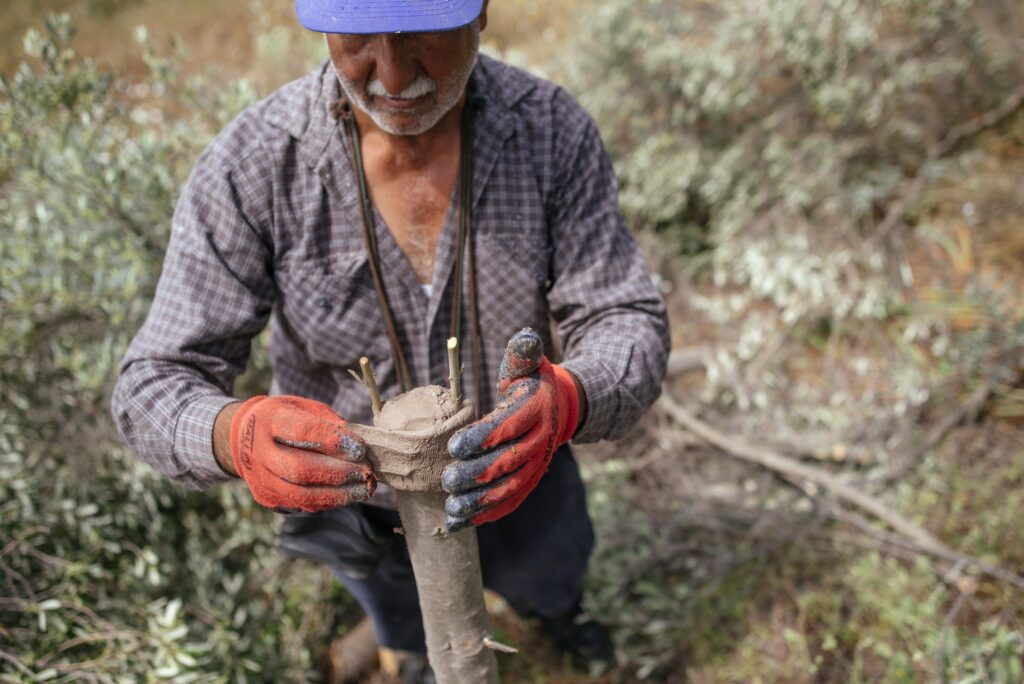
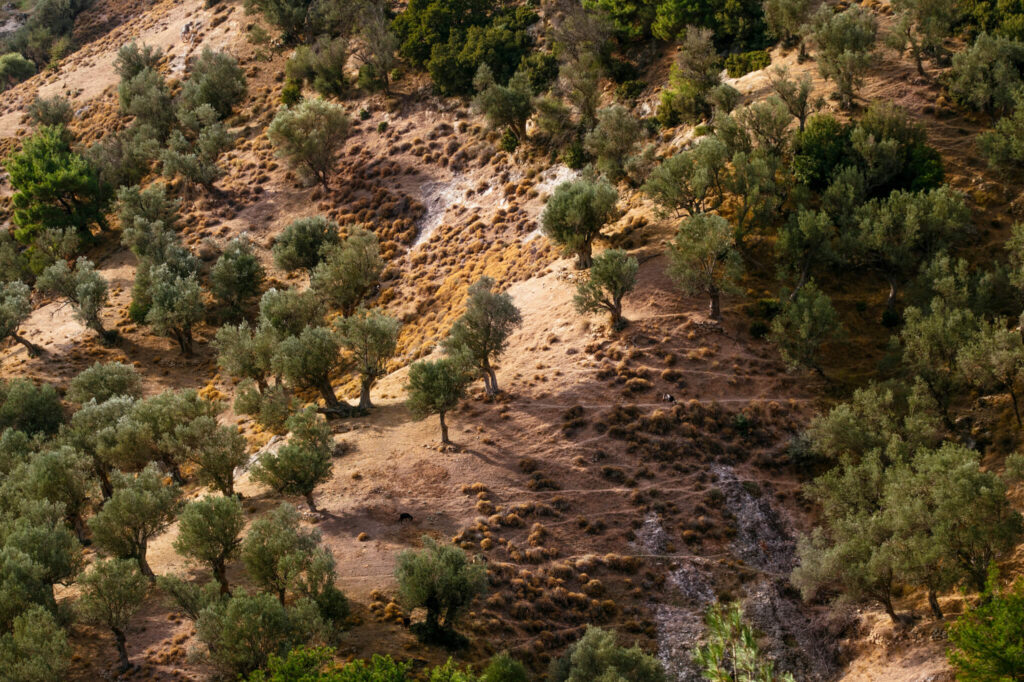

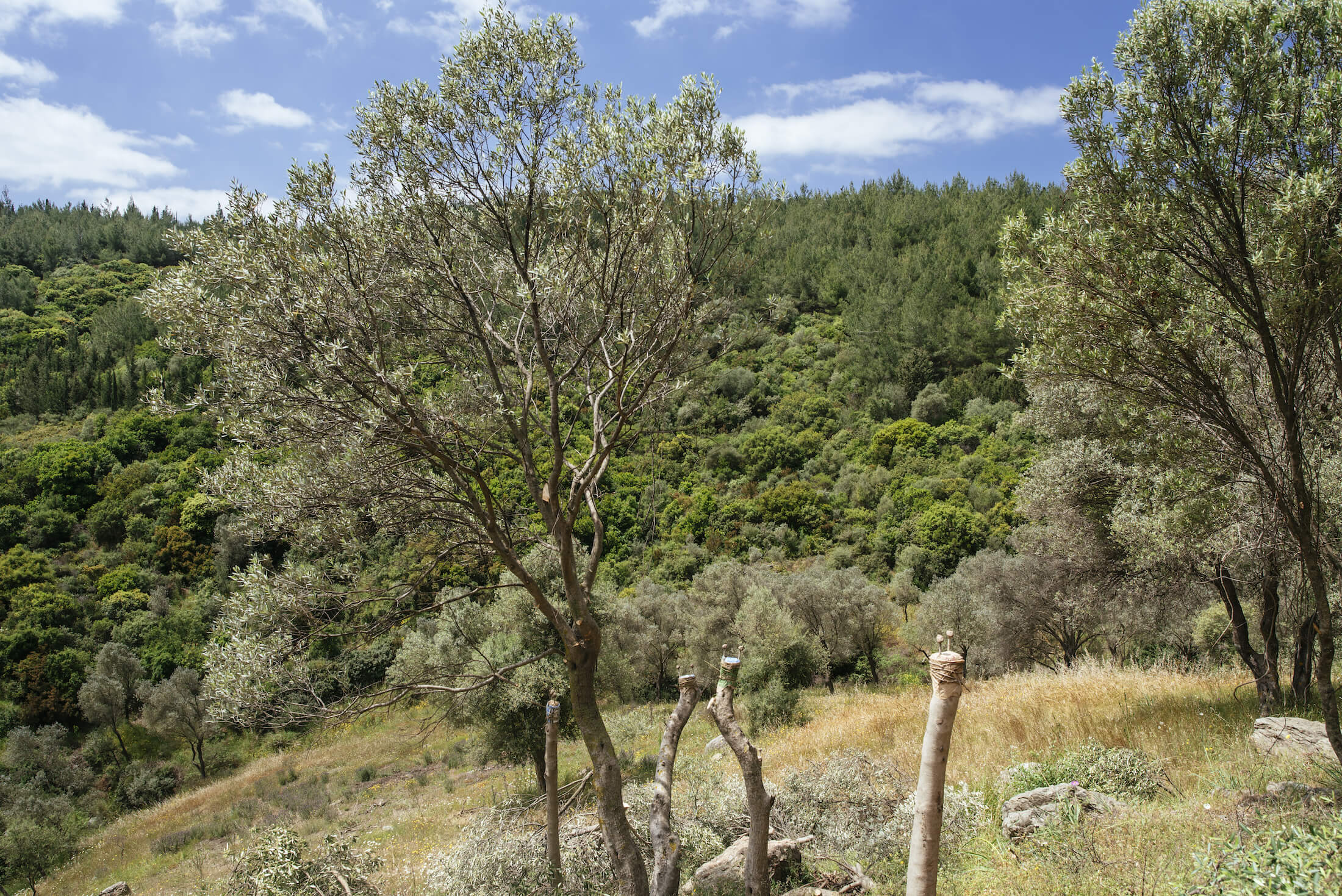
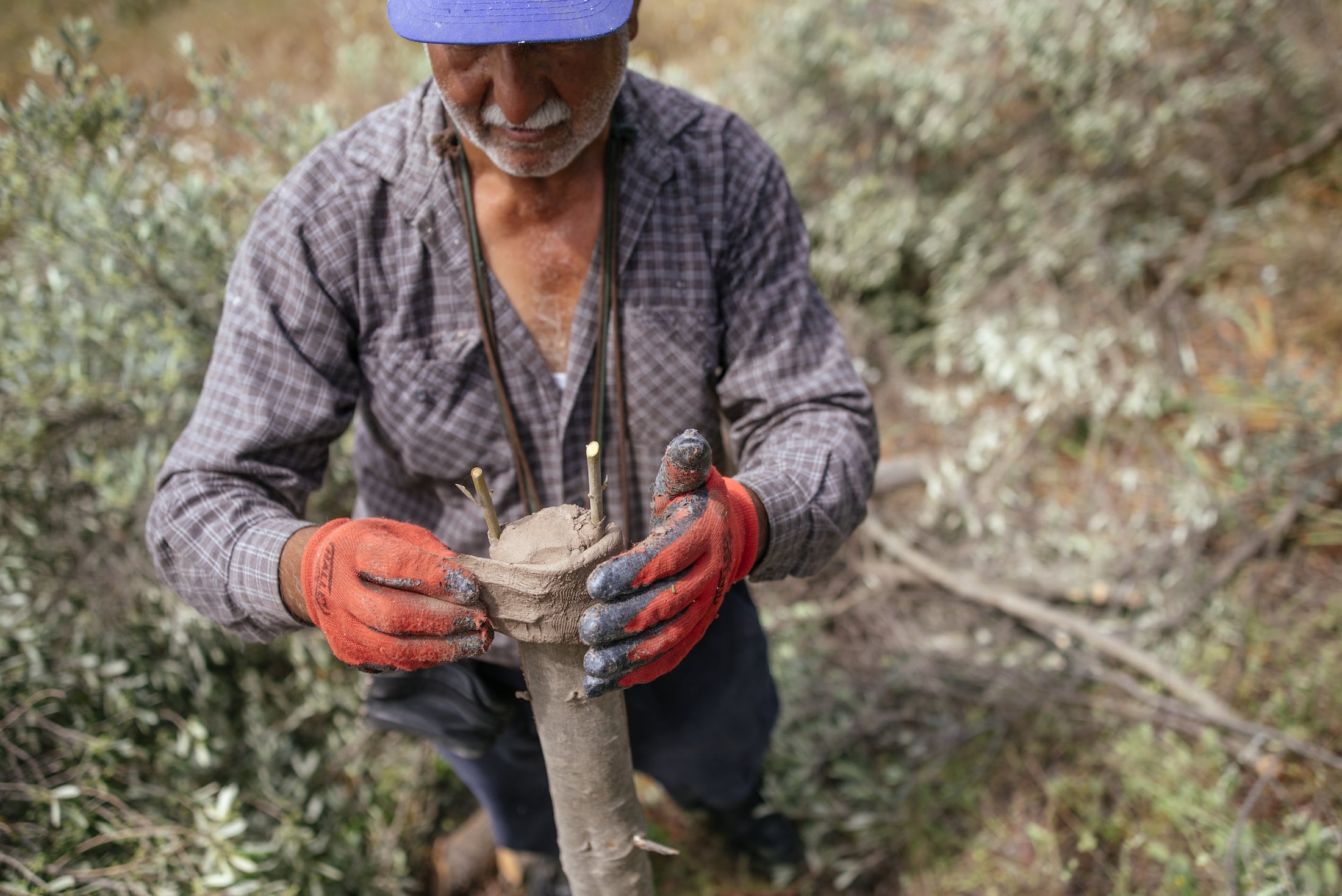
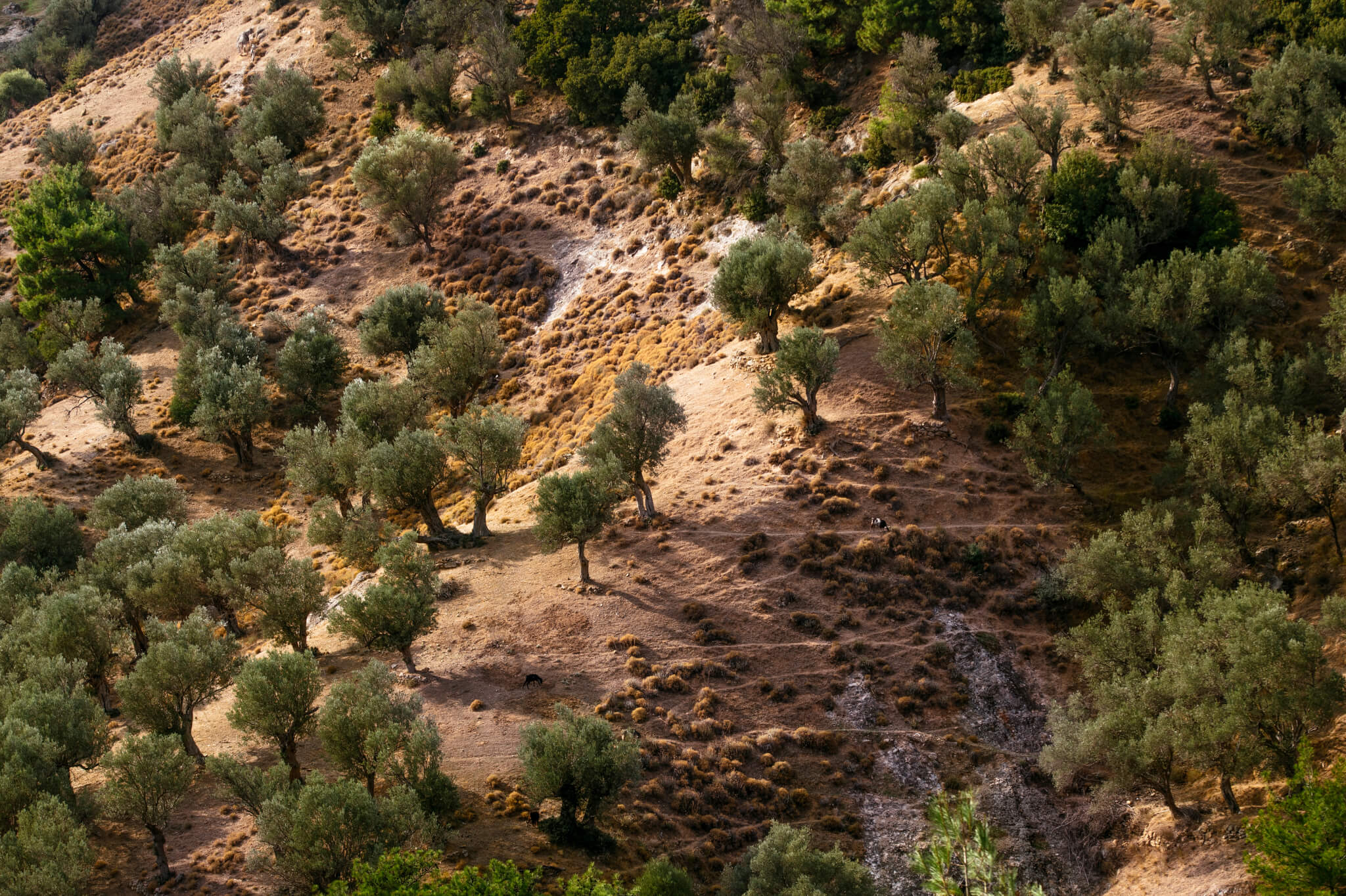

“Slow Olive Oil” is a concept that describes delicious, high-quality olive oils which protect both human health and nature at the same time. Sevilma is produced in accordance with the ‘Slow Olive Oil’ criteria established as a result of research carried out by the Seferihisar Nature School. Grouped under five main headings, these criteria encompass a meticulous evaluation process covering every stage from the olive seed to the oil on our tables.
Under these criteria, Sevilma produces single-variety olive oil and bottles the oil from Anatolian olives—each a distinct fruit with its own unique flavour—without blending them together. It allows you to discover the very distinct characteristics of all the varieties – such as Erkence and Memecik – and the terroirs from which they originate.
Criteria for Slow Olive Oil
Criteria for trees
- The olive tree must be a local variety of the region
- The olive grove should preferably face south
Criteria for the care of the olive grove
- No irrigation of the olive grove
- Olives do not come into contact with chemical poisons
- Not using chemical fertilizers in olive groves
Biodiversity
- There is no wire around the olive grove, so that wild animals are free to roam
- Protecting the ecosystem integrity of olive trees
- Caring for olives in a way that does not reduce the use of biodiversity trees
Harvest
- Not damaging the tree while picking olives
- Transportation of olives to the oil mill in materials that allow air and prevent crushing
Extraction and Storage
- Single-Varietal Production: The separate pressing of different olive varieties according to their respective terroirs, and the bottling of their oils without blending them together
- Pressing the olives in a short time after harvesting, not waiting
- Cold pressing
- Squeezing the oil under high hygienic conditions
- Eliminating any possibility that may reduce olive oil quality during pressing
- No uninsured workers should be employed in olive oil production
- The oil should be stored in a dark, cool place and in containers that will not compromise its quality.
Technical
Technical Specifications of the Factory
Our olive oil mill has been designed in accordance with ecological (two-phase) processing technology. Our facility is equipped with a two-phase olive pressing system with a capacity of 40 tonnes per day for olive oil production.
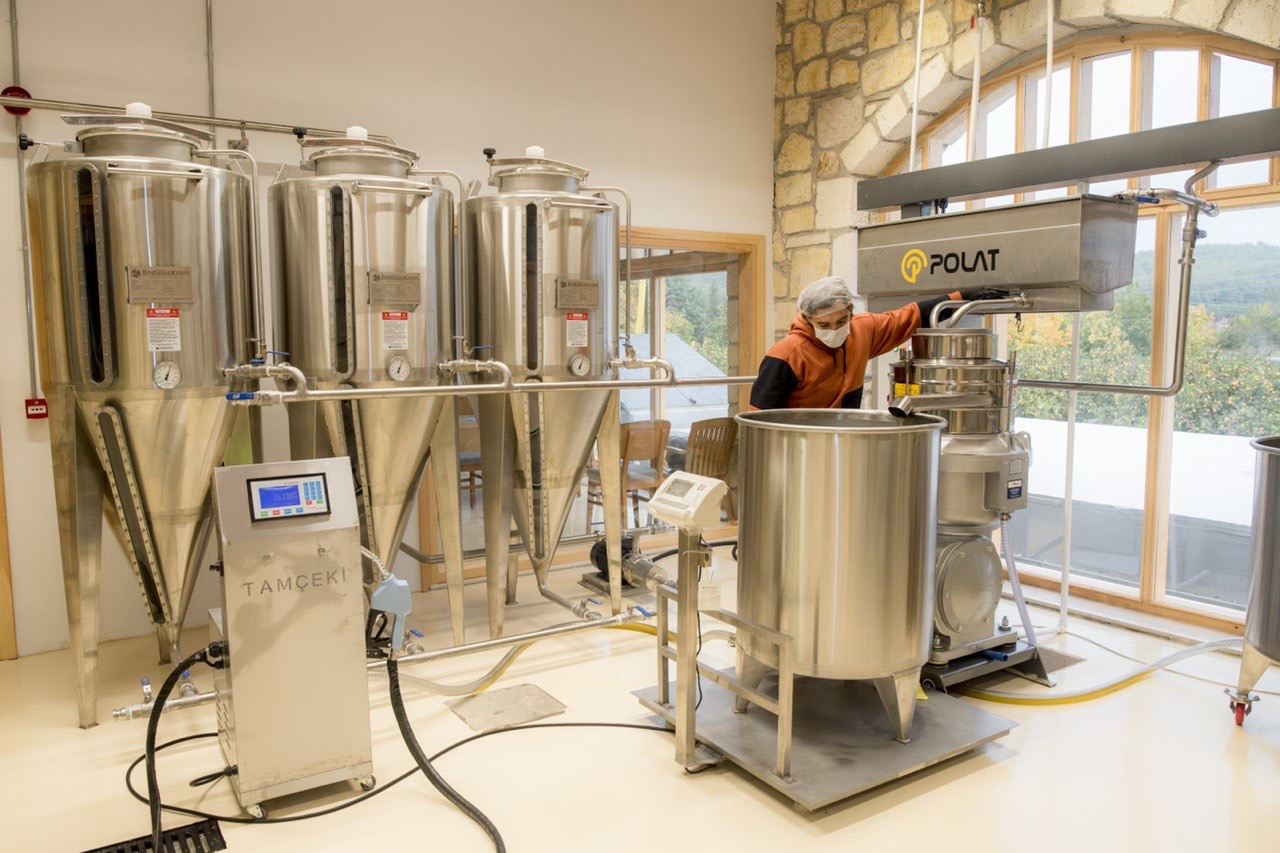
All materials used in olive oil production and the storage conditions are food-grade and meet the highest standards. Sevilma Olive Oil is carefully aged in chrome tanks located in a storage area with a capacity of 30 tonnes, sorted according to its technical specifications and the variety of olive.
The bottling of olive oils takes place at the bottling unit, which is also located within the factory. Bottling is carried out into glass and tin containers ranging in size from 0.25 ml to 18 litres.
Information on the equipment and machinery located within our factory
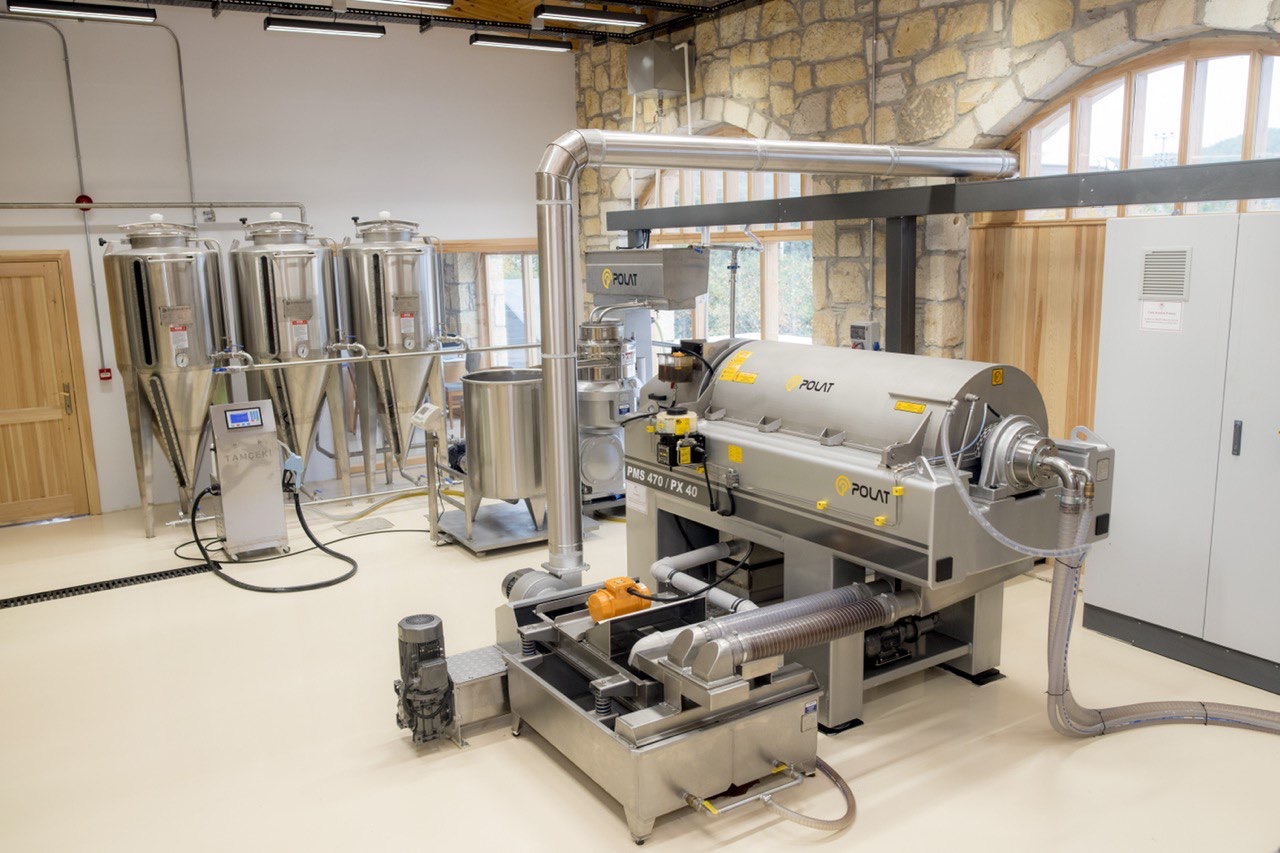
- Olive Oil Production Machine (PMS470-PX40 Continuous Olive Press with a Capacity of 40 Tonnes per Day)
- Olive Washing Machine
- Modular Mixer
- Crusher
- Decanter
- Separator
Olive Oil Storage Tanks and Bottling Equipment
- 4 x 5,000-litre olive oil storage tanks, AISI 304 L
- 2 x 3,000-litre olive oil storage tanks, AISI 304 L
- 2 x 2,000-litre olive oil storage tanks, AISI 304 L
- 2 x 1,000-litre olive oil storage tanks, AISI 304 L
- 3 Tonnes/SA Vehicle-Mounted Oil Transfer Pump
- 500 kg Stainless Steel Weighbridge
- Filling Unit
- 2-Nozzle Semi-Automatic PET – Bottle – Tin Can Filling Unit
- Semi-Automatic Lid Sealing Unit
- Semi-Automatic Aluminium Metal Lid Coating Unit
- Manual Hood Heating Unit
- Semi-Automatic Labelling Machine
- Inkjet Printer and Conveyor Belt


Production Stages
Olive harvest
Olives are harvested between September and February. To produce high-quality olive oil, the olive oil production process must begin within 24 hours of the olives being harvested. For this reason, the olives delivered to our factory are pressed without delay. Olive oil produced at the start of the olive season, whilst the olives are still green, is known as “early harvest”, whilst oil produced in later months, once the olives have turned black, is known as “late harvest”.
Olive washing and sorting
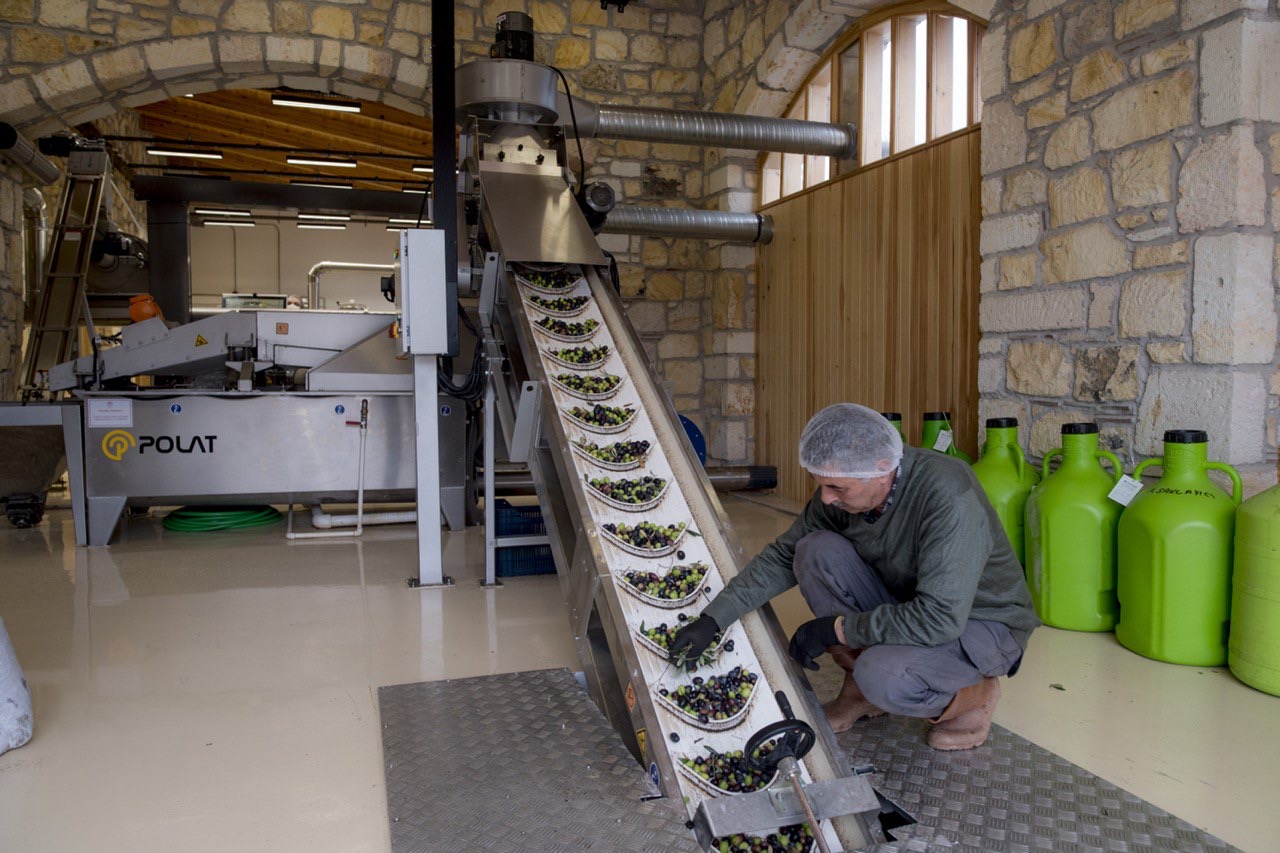
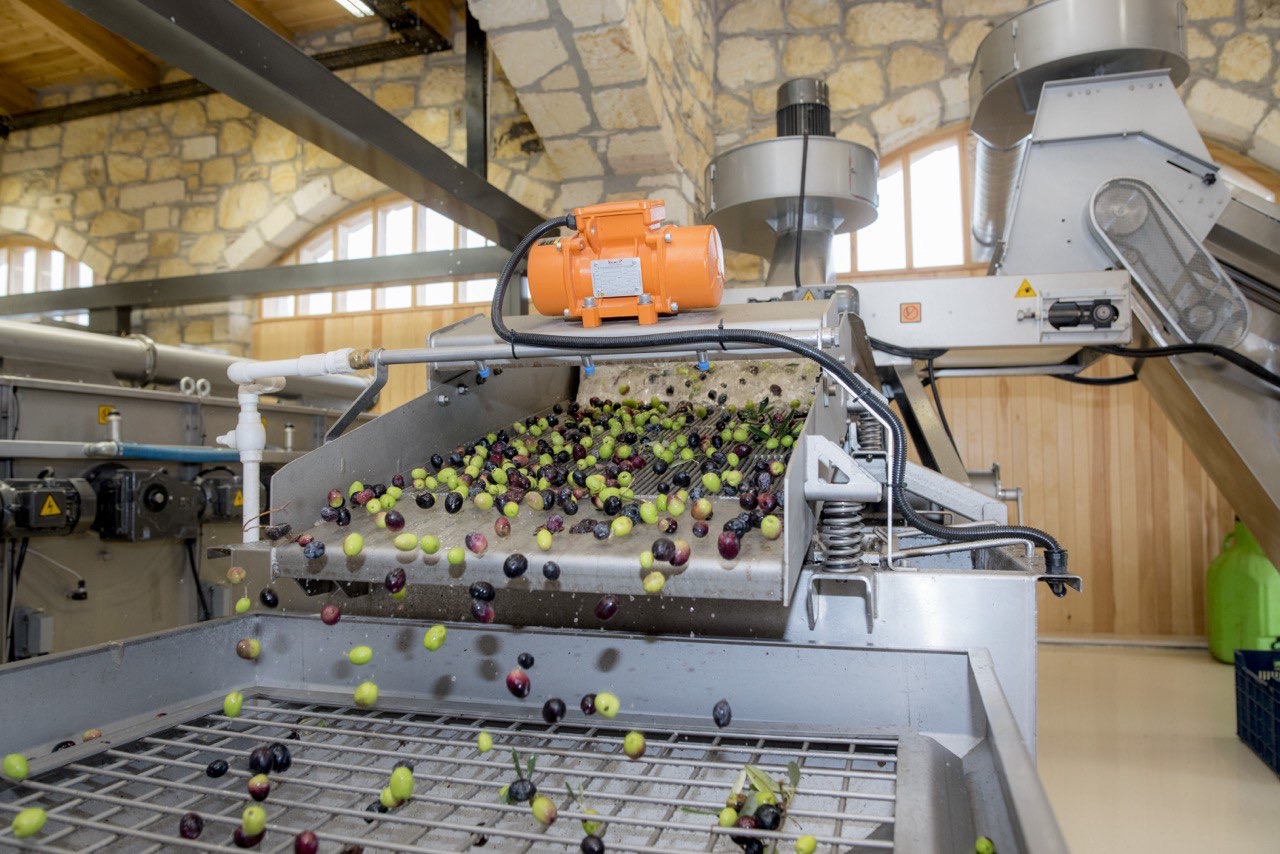
As substances that could adversely affect the quality of the olive oil (such as twigs, leaves or stones) become mixed in with the olives during harvesting, these must first be removed. The olives, which have been transported to the factory in crates, are emptied into a pit-like section known as a “bunker”. The olives are transported via a conveyor belt, known as an “elevator”, to the section containing the fans, where they are separated from any foreign matter. The olives are washed with pressurised water to remove any dust from their surfaces. Following this process, the olives proceed to the crushing and grinding section.
Crushing and grinding
At this stage of the production process, the olives arriving at the crushing section are crushed and ground—along with their stones—to form a paste, ensuring that the oil is easily extracted.
Kneading (Malaxation)
This stage is the most important part of the olive oil production process. It is at this stage that cold-pressed olive oil is produced. The “malaxation” process involves kneading the olive paste. The crushed olives, now in the form of a purée, are kneaded for an average of 20–40 minutes by machines known as “malaxers”, whilst being heated only very slightly. For olive oil to be classified as “cold-pressed”, the malaxation process must take place at a temperature below 27°C. Oils produced using methods other than the cold-pressing technique lose their healthy components, such as polyphenols, due to the heat treatment they undergo. All the olive oils produced at our factory are obtained using the cold-pressed method.
Separation (Decanter)
At this stage, the olive paste is fed via a paste pump into a section known as the “decanter”. The decanter is a horizontal cylindrical system. In this section, the oil is separated from the “prina”, i.e. the olive pomace. As the olive paste rotates in a horizontal plane, the pomace, known as ‘prina’, is discharged.
Re-separation (Centrifugal separator)
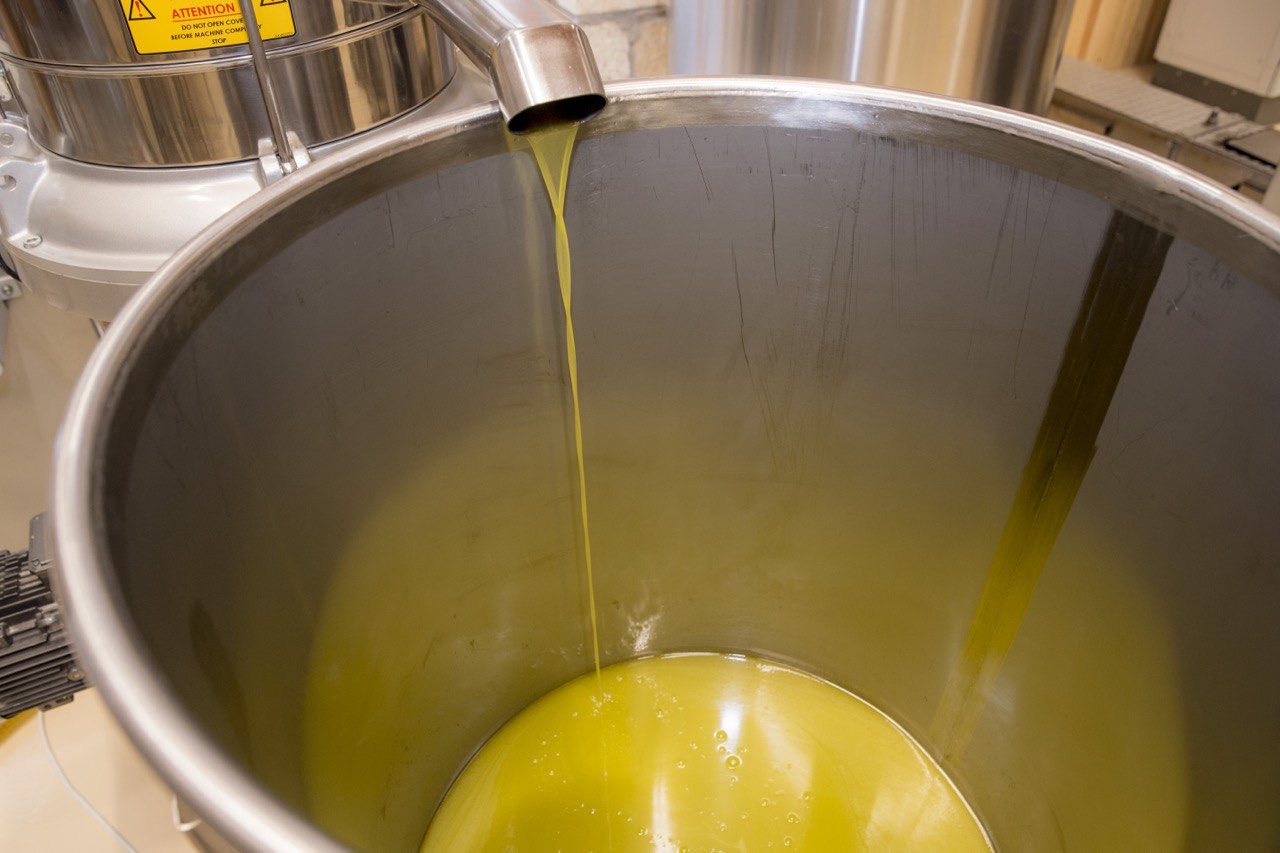
In the previous stage, the oil was separated from the olive pomace. The oil and pomace separated from the olive pomace are transferred by pumps to a section known as the “centrifugal separator”. At this stage, the oil is separated for a second time. Here, the lighter water is separated from the heavier olive oil. This process is the final stage in olive oil production; the fresh olive oil is now ready for storage.
Analysis and tasting
Once olive oil has been produced, it undergoes a wide range of chemical and sensory analyses. We carry out acidity analysis in our own laboratory. Other key oil parameters, such as polyphenol content, are analysed by an accredited laboratory following the classification of the oils.
Storage
The storage process is just as important as the production of olive oil. We take the utmost care to ensure that the olive oil we produce retains its freshness throughout the year, just as it did on the very first day. We carefully store the olive oil in our warehouses so that it is not exposed to heat, light or oxygen. To ensure our olive oil is not affected by sudden changes in temperature, we allow it to rest in chrome tanks within our storage facility, where the temperature is constantly monitored. We prevent contact with oxygen by isolating it with nitrogen gas.
Filtering
This step, which is optional in olive oil production, is carried out using paper filters specially manufactured for this purpose. Filtration removes any sediment from the olive oil. As a result, the olive oil takes on a brighter and clearer appearance. More importantly, filtered olive oil retains its qualities for a longer period. For this reason, with the exception of our first harvest, we offer all our olive oils for sale after they have been filtered.
Filling Unit and Packaging
At our facility, which complies with the highest standards of quality and food safety, we carry out filling and packaging using an automated system under hygienic conditions, without any manual handling. We then package our products according to your requirements and dispatch them via courier to our retail outlets or deliver them directly to you from our facility.
 Türkçe
 English (UK)