
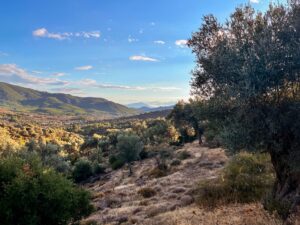
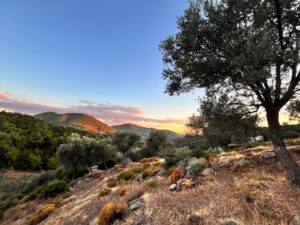
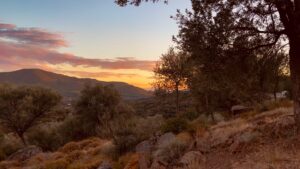


Sevilma Olive Grove has become Turkey’s first Slow Food Farm
The Sevilma Olive Grove, which serves as a global model for agricultural production in harmony with nature, has been certified as Turkey’s first Slow Food Farm. The Sevilma Olive Grove in the village of Orhanlı has earned its place as one of the 25 Slow Food Farms worldwide. Spanning 20 countries, the 25 Slow Food Farms are amplifying the voices of small-scale producers, promoting agriculture in harmony with nature and combating food inflation. The number of Slow Food Farms is expected to grow rapidly both globally and in Turkey.
The industrial food system, with its focus on efficiency and profit, has devastating effects on our health, the natural world, society and the economy. Large-scale agriculture and the global food market not only contribute to the effects of climate change, the loss of biodiversity and the depletion of natural ecosystems, but also exacerbate income inequality and threaten social welfare. Small-scale farms, such as the Sevilma Olive Grove, are recognised globally as the fastest and most sustainable solution to natural disasters, reliance on imported inputs and an unstable food market.
Sevilma Olive Grove has become one of the 25 Slow Food Farms in the world
Turkey’s first Slow Food Farm is the Sevilma Olive Grove, located in the village of Orhanlı in the Seferihisar district of İzmir. The Sevilma Olive Grove has earned the right to be counted amongst the 25 Slow Food Farms worldwide. The Slow Food Farms network, which spans twenty countries, includes representatives from many nations such as Italy, the United Kingdom, the United States, Mexico, Sweden and Nigeria.
You can access a map of all Slow Food farms worldwide via the link below: Slow Food Farms
Güven Eken, founder of the Sevilma Olive Grove, said in a statement on the subject: “Located within the Orhanlı Valley Ancient Production Basin, Sevilma is a grove dedicated primarily to olive cultivation. Here, we grow the early-ripening olive variety native to Izmir and produce olive oils that have been certified as a “Presidium” by Slow Food. In our orchard, where the vast majority of trees are grafted onto wild olive stock, the olives are neither watered nor ploughed, and no chemical pesticides or fertilisers are used. Consequently, our orchard functions as an olive forest ecosystem. Sevilma serves as a model for sustainable agriculture whilst also supporting biodiversity. All our work draws inspiration from the activities of the Slow Food Mahal group, a local community active in our region. ”I hope that this international recognition we have received will serve as an example to other producers who practise nature-friendly farming and support wildlife,” he said.
What is a Slow Food Farm?
The Slow Food Movement, which began in Italy in 1986 and has spread to more than 160 countries, aims to protect local and traditional food and agricultural cultures, and to preserve biodiversity and ecosystems. The concept of the Slow Food Farm, developed within this framework, refers to land cultivated for agricultural purposes where plants and/or animals are reared in accordance with the principles of agriculture in harmony with nature. These farms also support wildlife and biodiversity.
Slow Food Farms not only help farmers increase their livelihoods, but also aim to ensure fair pay and long-term economic and ecological stability. By amplifying the voices of these farmers, Slow Food enables them to connect with a global community comprising activists, chefs, consumers, food artisans, fishermen and other farmers who have long supported the movement.
Slow Food Farms aims to be the largest global network of farms dedicated to producing good, clean and fair food based on agro-ecological principles. By supporting small-scale producers, respecting nature and strengthening local economies, these farms ensure that everyone has the right to access healthy food.
The official website of Slow Food Farms worldwide: slowfood.com/insights/meet-the-slow-food-farms
 Türkçe
 English (UK)