
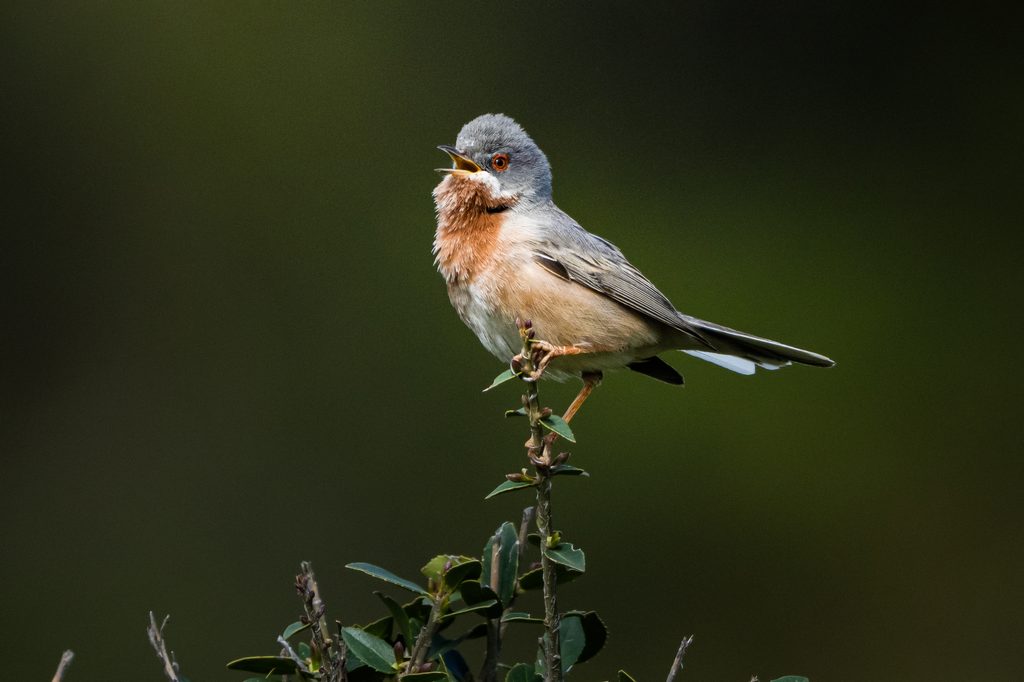
One of the birds that breed in the Sevilma Garden is the Bearded Warbler (Sylvia cantillans). Photo: Alper Tüydeş
Article: Güven Eken
Could it be that everything we think belongs to us actually belongs more to the world than to us? A small reflection of the world? I think this is particularly true of a garden we have made our own. Because within every garden live countless creatures we do not know and which, of course, do not belong to us.
Whether we have only just settled there, or whether it is a family garden passed down to us from generation to generation, in the face of nature’s boundless depth, we can be nothing more than ordinary living beings in that garden. Belonging: A form of attachment that we could never create, not even with a single breath of nature or a handful of water.
Let alone owning it. Even if we know a place by day, we cannot know it by night. Who can truly recognise the owls and bats that roam in their own garden at night, or the creatures that take refuge in the darkness? Let’s say we do know its night—how could we possibly grasp the roots beneath the earth, the fungi attached to them, and the ants’ nests amidst the planet’s complexity? Suppose we’ve grasped what lies beneath the earth as well. Sitting within the walls of our home, how can we lay claim to the wind blowing in the sky, the dampness enveloping our garden, and the dewdrop that suddenly falls on an autumn morning… To the garden’s past, which existed long before we were here, and its future, which will continue to turn long after we are gone… How can we lay claim to them?
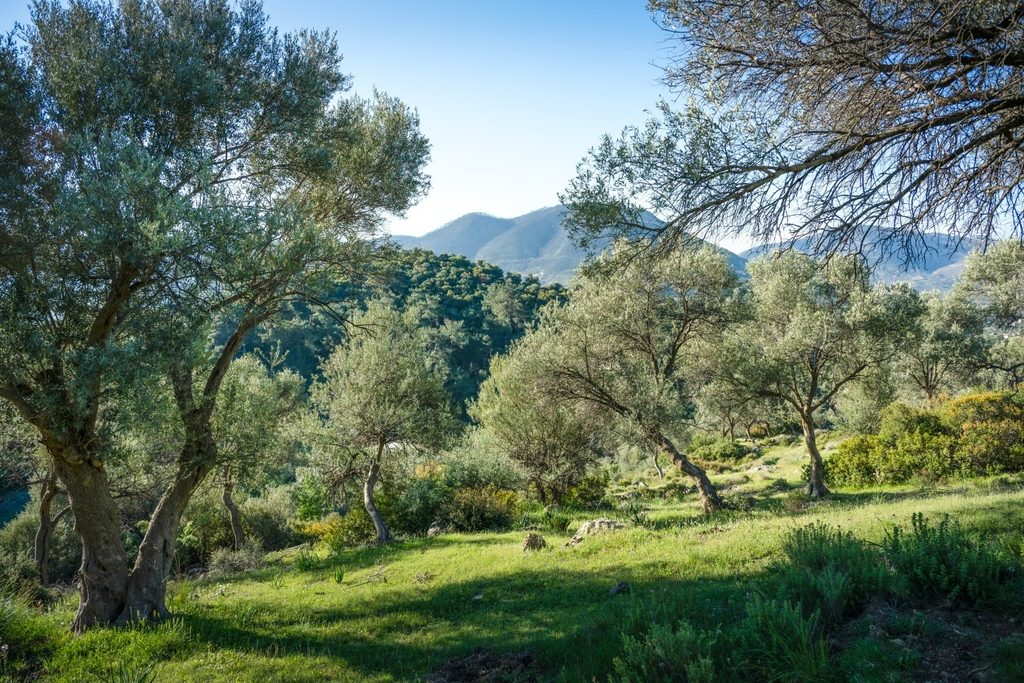
Seferihisar’s Sevilma Garden in Izmir is Turkey’s first Slow Food Farm. Photo: Alper Tüydeş
A garden for birds
Seferihisar When we bought our family garden in Orhanlı, I was largely unfamiliar with these ideas. Before long, I became aware of the birds flitting amongst the trees in the garden. Every move I made held meaning for them. Was I their friend, or a stranger transforming their habitat for my own sustenance and desires?
The first thing I noticed was the birds’ great need for small branches and densely leafed shrubs and trees. As a result, we stopped pruning the trees altogether. As the trees were set free, so too were the birds and other creatures in the garden. Warblers, which had not previously been in the garden, along with yellowhammers – which favour dense tree branches – and many others joined us. The number of blackbirds increased.
After a while, I noticed wild tree saplings growing of their own accord along the garden boundary, in places where the tractor couldn’t reach. Menengiç, oak, pine, service tree and mastic. It was precisely this area where butterflies and birds were most abundant. Tree seeds carried from the surrounding scrubland, woods and other gardens were attempting to redraw nature’s boundaries along this borderline, where they could find peace. For the tractor’s plough could not reach this slender line.
As a result, we gave up the habit of ploughing the land. The region’s native trees began to encroach gradually from the edge inwards. The garden turned into a woodland consisting of trees that were half-domesticated, half-wild. The trees were followed by tortoises, squirrels and martens.
In the garden where trees were once planted and pruned with great care, pomegranates, quinces and other fruits, wild trees and countless other living creatures now coexist. There are so many different species of insects and birds that no single insect can multiply to the extent that it would damage the fruit trees or make them sick. After 16 years, as I walk through a garden that does not belong to us, I come across a new surprise every morning. It is as if it were a person I have never met before; like a forest, a steppe or a delta that I get to know all over again every time I visit.
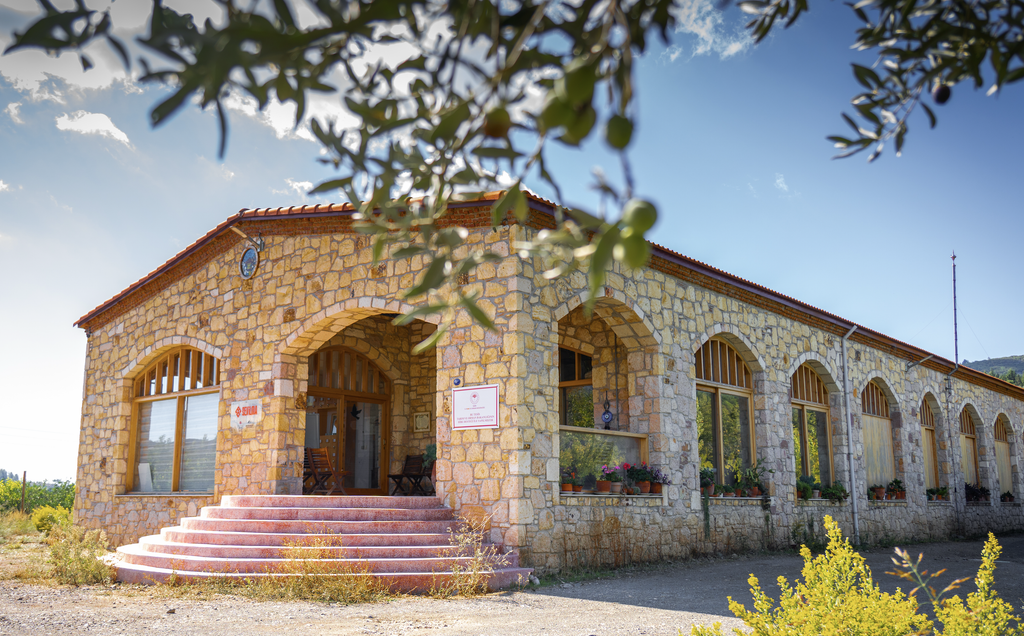
Sevilma Garden’s Ercan Baba Olive Oil Mill. Photo: Yağız Ertürk
Agroecology
Now I realise, though, that, The most powerful way to love something or somewhere is to keep being able to be surprised. Not to let time steal that sense of wonder from the relationship. That, to me, is what agroecology is all about. Whilst shaping the soil to feed ourselves, you do not stifle that childlike sense of wonder that our nature so deeply craves. You do not own the soil; you become its companion.
In my view, agroecology is the key to producing food with a sense of wonder. That is why, when seeds are sown in Anatolia, a formula is given. ‘To the wolf, to the bird, to the earth.’ In other words, two parts for nature and one part for our sustenance. This brief saying reveals not only the secret of producing with wonder, but also of producing whilst sharing the flavour with other living beings in nature.
Because it is not enough for a meal to be delicious just for us. Food must also be delicious for all living things in nature—for birds, insects and trees. Every mouthful we eat must sustain the cycles of nature that interweave all life. To this end, every producer must discover the secrets of cultivating their garden without harming nature. Those who bring food to the table, meanwhile, must explore and understand the relationship between what they eat and nature. We are all part of this magnificent world, this marvellous garden. We cannot, with one hand, devise harsh measures for nature, whilst with the other, laying out feasts for ourselves.
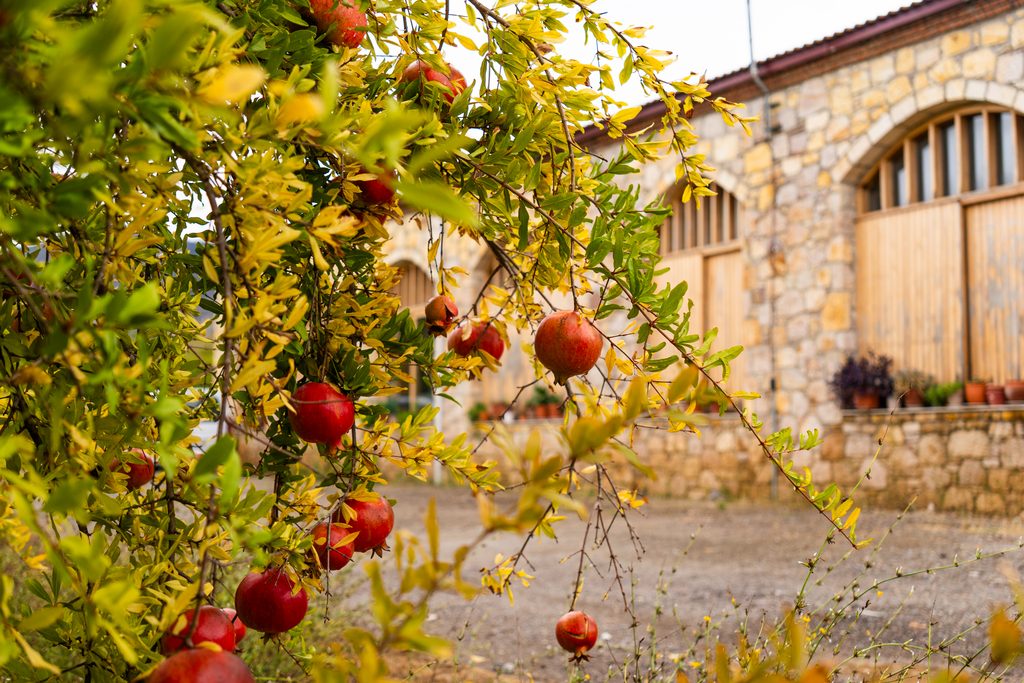
Pomegranates and Sevilma Garden. Photo: Yağız Ertürk
Slow Food Farms
At the Terra Madre gathering in Turin, which I attended in 2024, I learnt that Slow Food is working to establish a network bringing together agroecological farms from around the world. There, I met producers from very different continents around the world who were putting into practice what we had been doing in our garden in Seferihisar for over a decade. As soon as I returned to Izmir, I applied to become a Slow Food Farm, and so the farm, named after our mother, Sevilma Garden It has become Turkey’s first Slow Food Farm. It is a pleasure to be part of the Slow Food Farms network, which now numbers nearly thirty in Turkey and over a thousand worldwide.
Because our world is a shared garden for all of us, for all living things. Just as the sea is contained within a single drop, so too do Slow Food Farms hold a piece of the world’s unique beauty. We must take good care of each one so that the bounty of life does not diminish. We look after the Sevilma Garden with this spirit and these values. This place does not belong to us. It is a Garden of the World.
Alper Tüydeş and Yağız Ertürk took some unique photographs of the Sevilma Garden. Our endless thanks.
 Türkçe
 English (UK)